
Match sky to subject
Four skies, four different photographs
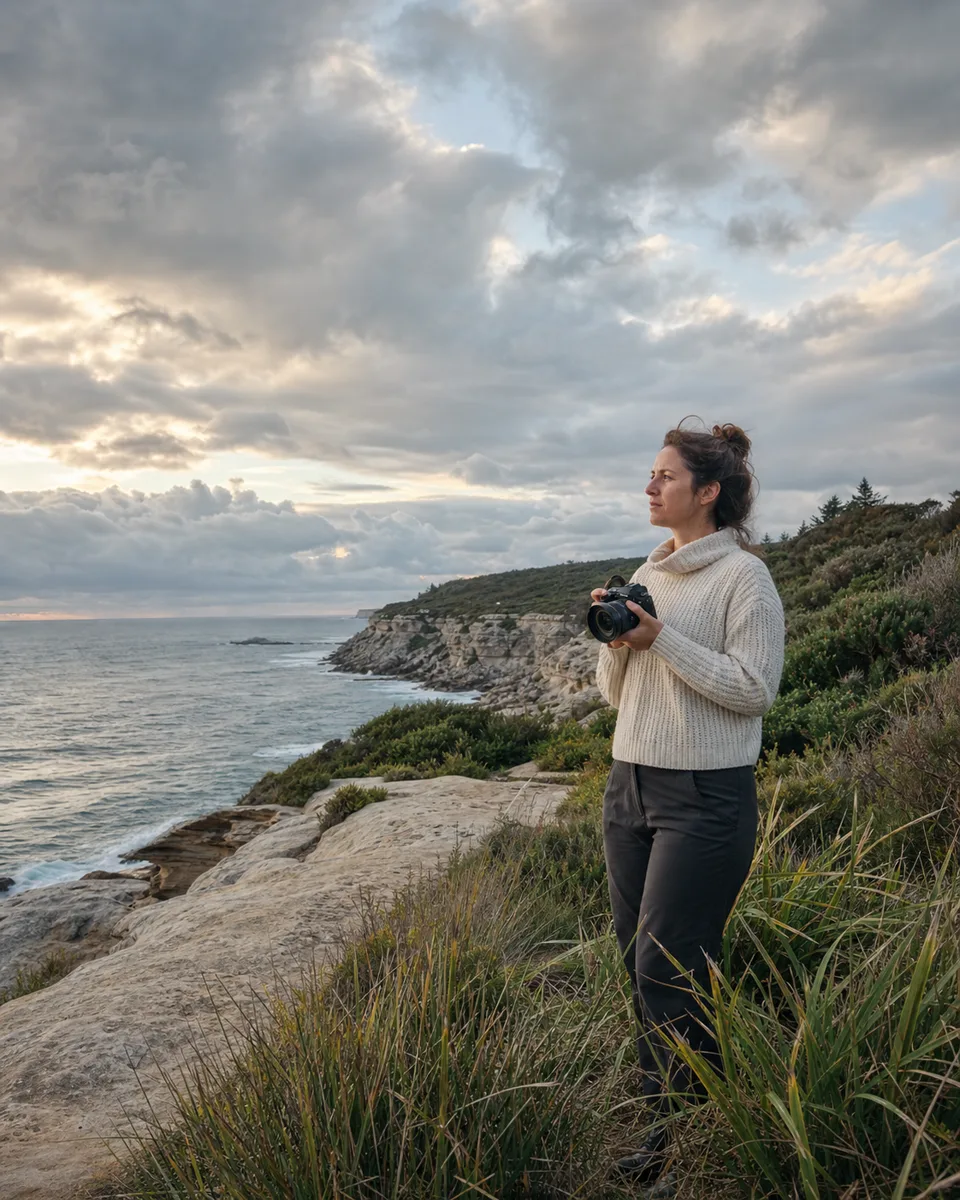
Cloud cover is useful only when it changes a decision. A low percentage often means direct, high-contrast light. Mid-range cloud can add texture while still letting warm light through. Heavy cloud makes soft, even light but usually reduces sunset colour.
Strong shape and colour
Wait until the sun is low, place it behind the subject, or move faces into open shade while the light is still harsh.
Texture and sunset potential
Look for a clear strip near the western horizon beneath higher cloud. That gap can light the underside of the cloud for a short period.
Soft portrait light
Faces can be photographed from more directions with fewer hard shadows. Use colour, depth and clean backgrounds so the image does not feel flat.
Even light, quieter sky
Expose carefully for skin and foreground detail. Move closer, simplify the frame and stop waiting for a sky that may not become the subject.
For people
Soft light and good light are not the same thing
Overcast light is forgiving because it reduces hard shadows under the eyes and nose. It also removes the natural direction that gives a face shape. Place your subject near an open edge of shade or turn them toward the brightest part of the sky to keep the light intentional.
In a clear sky, avoid facing a subject directly into a low sun. Backlight them, expose for the face and use the darker landscape or architecture behind them for separation. In broken cloud, be ready for rapid changes: a scene can move from flat to directional in seconds.
Outdoor forecasts matter less in a controlled studio, where temperature and light remain consistent. For families around Chermside and Brisbane's north, explore the Sweetlife newborn and baby studio.
For colour
A promising cloud percentage is not a sunset guarantee
Cloud around 25–60% often creates the strongest combination of open light and sky texture. But total cloud cover cannot tell you whether the horizon itself is blocked. Low cloud sitting on the western horizon can stop direct colour even when the rest of the sky looks ideal.
Use a forecast as a reason to arrive, not a promise. Watch the western edge during the final 20 minutes before sunset. If a bright strip appears below darker cloud, prepare for a short burst of colour. If the horizon stays blocked, turn away from the sunset and photograph the soft light falling on people, buildings or wet ground.
Weather with texture
Rain creates reflection; wind removes control
Showers near sunset can interrupt a session, but the break after rain can create strong reflected colour on streets, boardwalks and dark rock. Work from a sheltered edge, keep a dry cloth separate from the rest of the kit and avoid changing lenses in active spray.
Wind above roughly 35 km/h becomes a composition problem for hair, clothing, tripods and long exposures. A technically beautiful light forecast is not a good portrait window when the subject cannot settle. Use the forecast to choose a sheltered location, shorten the session or switch to a subject that benefits from movement.
Forecast meets geography
Read the direction of light, weather and shelter
A city forecast covers a broad area. The useful conditions at a beach, riverbank, laneway or elevated lookout can differ because the horizon and wind exposure are different. Before committing to a location, identify where the sun sets, what blocks the western sky and which direction offers shelter.
Watch the exposed wind
Headlands offer a clean horizon but little shelter. A nearby bay, dune edge or building line can keep similar light with better control for people and equipment.
Expect an earlier visual sunset
Tall buildings can remove direct light well before the listed sunset. Use reflected light between pale buildings or plan blue-hour frames once street lighting begins.
Check the real horizon
A ridge to the west can end golden light early. Higher ground may keep sun longer, but it can also increase wind and reduce easy access after dark.
Choose a workable retreat
Know where people and equipment can move if a shower arrives. Covered walkways and sheltered street edges let a short weather break become part of the plan.
Before leaving
A five-minute photography weather check
- Choose the photographic goal. Portrait softness, sunset colour and a clear cityscape favour different skies.
- Check the selected hour. Daily averages can hide a shower or wind change during the actual session.
- Read cloud and rain separately. Useful cloud texture does not mean the session will remain dry.
- Check wind against the subject. Hair, long clothing, foliage, audio and tripod work all have different tolerances.
- Plan the fallback frame. If the western sky closes, photograph faces in soft light, reflections after rain or the blue-hour city instead.
Use honest language
What a light forecast can and cannot know
- Sun times are astronomical estimates for a mathematical horizon. Hills and buildings can shorten visible light.
- Cloud forecasts describe a model area, not the exact western gap visible from your position.
- Smoke, haze and airborne moisture can strengthen or mute colour without appearing clearly in a simple cloud percentage.
- Fast coastal weather can change after the latest model update.
OZSNAP therefore ranks “potential” and shows rain, wind and cloud separately. The score helps compare days; the final decision still belongs to the sky in front of you.
Compare the next seven evenings
Switch between portrait and sunset-colour goals, then send the selected day directly to the shoot planner.
Open the weekly light forecastQuick answers
Common photography weather questions
What cloud cover is best for sunset photography?
Broken cloud often offers the best balance of texture and open light, but the western horizon must remain clear enough for sunlight to reach the cloud. A percentage alone cannot show that gap.
Is overcast weather good for portraits?
Yes. It reduces hard facial shadows and gives more freedom to choose a background. Turn the subject towards the brightest open sky to keep shape in the face.
How much wind is too much for a portrait session?
There is no single threshold for every location. Around 35 km/h, exposed sessions often become difficult, but gusts, shelter, hair, clothing and subject comfort matter as much as the average.