
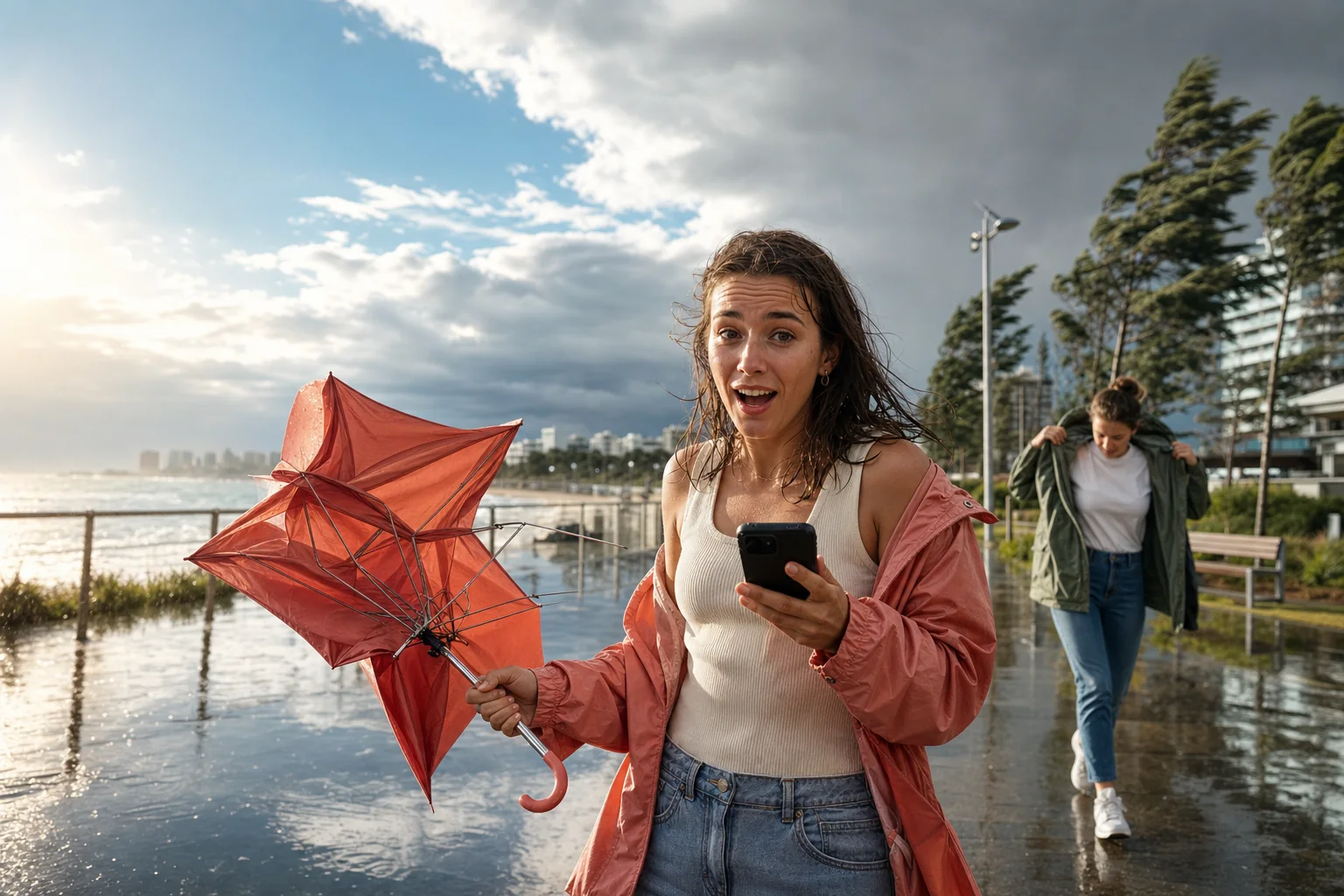
The real problem
A daily summary is a headline, not a plan
Your weather app usually has the information you need. The mistake is treating the biggest number and one small icon as a complete answer.
A forecast saying 24 degrees and partly cloudy may describe a cool 15-degree school run, a bright UV-heavy lunch, a gusty afternoon and a shower after sunset. The daily summary has not lied. It has compressed several different hours and several different risks into one line.
This matters far beyond photography. It changes what you wear to work, what children need at sport, whether a dog walk is comfortable, when to set up a barbecue, what to pack for a day trip and whether a sunset plan needs shelter.
Mistake 1
You dress for the daily maximum
The large temperature on a forecast card is often the day's expected maximum. It may arrive for a short period in the afternoon, long after you leave home and before you travel back.
If a day reaches 25 degrees at 2 pm but sits near 14 degrees during the morning commute, dressing only for 25 leaves you cold for the first part of the day. The reverse happens after sunset, especially in dry inland areas or when a cool change arrives.
Read it better: check the temperature at departure, during the main activity and when you expect to return. If those hours span more than one clothing level, use a removable layer instead of trying to find one perfect outfit.
OZSNAP's 10-level what-to-wear guide gives each feels-like range a practical starting outfit, then shows how to adjust it for wind, rain, UV and activity.
Mistake 2
You read air temperature and ignore feels-like
Two 20-degree days can feel nothing alike. Wind can pull heat away from the body. Humidity can make warmth feel heavier. Direct sun can make an exposed space feel much hotter than a shaded one.
The Open-Meteo forecast documentation lists apparent temperature separately from air temperature because it combines additional conditions that affect how the air feels to a person. It is still an estimate, but it is usually the better starting point for clothing.
Read it better: use apparent temperature for the hour you will be outside, then adjust for the activity. Standing beside a sports field needs more warmth than jogging through it. Sitting in shade needs more than walking in sun. A windy ferry deck is not the same as a sheltered city street.
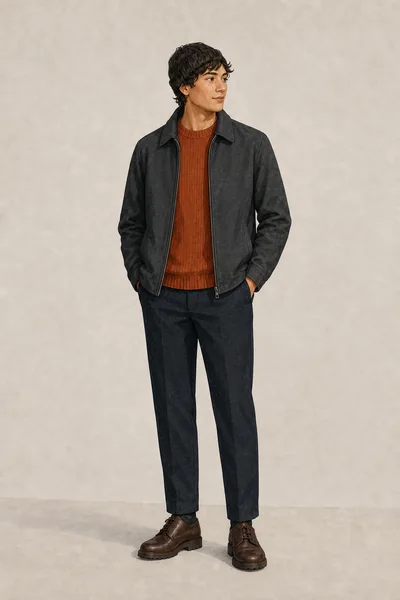
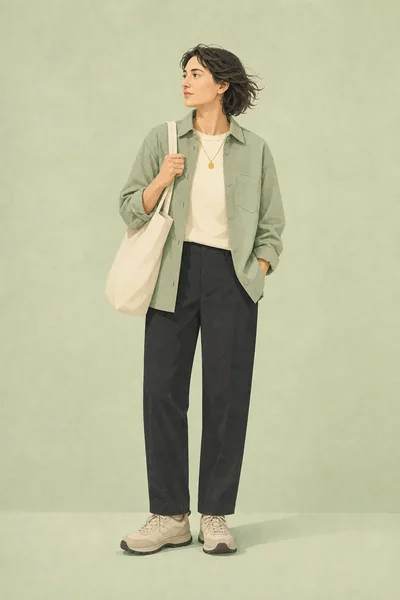
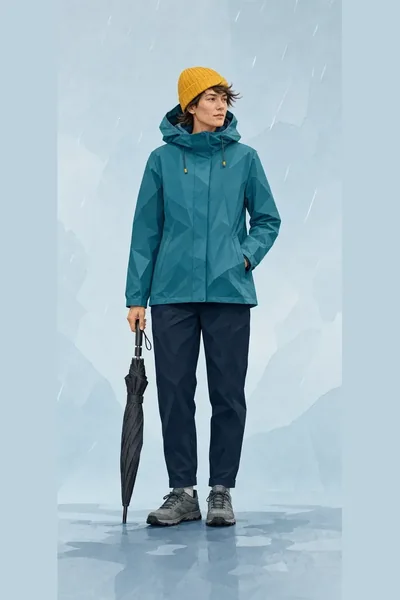
A useful outfit forecast can change across the same day. A jacket, a lighter middle layer and rain protection are not three competing answers; they may be the correct sequence.
Mistake 3
You treat chance of rain as duration
A rain percentage does not tell you that it will rain for that percentage of the day. It also does not tell you, by itself, how heavy the rain will be or whether it overlaps your plan.
A high chance of a brief shower may be easier to manage than a lower chance of a slow rain band arriving during the only hour you can be outside. The practical questions are timing, expected amount, intensity and whether there is a dry window before or after.
Read it better: open the hourly forecast. Find the first likely wet hour, the expected amount and the next dry interval. Decide whether a compact umbrella is enough, whether the activity can move under cover or whether the timing should change.
For a picnic, outdoor market or family outing, identify shelter before leaving. For a photo walk, a passing shower may create reflections and clean colour, but only when you can keep people and equipment protected. The outdoor shoot checklist shows how to turn that change into a primary and fallback plan.
Mistake 4
You check wind speed but miss the gusts
Average wind is the background condition. Gusts are the stronger bursts that flip umbrellas, move picnic equipment, blow hair across faces and make an exposed lookout uncomfortable.
Location matters too. A forecast for a city does not mean every street feels identical. Water edges, headlands, bridges and open ovals can be far more exposed than a sheltered courtyard only a few blocks away.
Read it better: compare sustained wind with gusts and picture the actual location. If gusts are much stronger, secure loose items and choose a sheltered side. If the plan depends on calm conditions, move the activity rather than hoping an exposed spot will behave like the city-wide number.
Mistake 5
You assume cool or cloudy means low UV
Temperature, cloud and UV are related to different parts of the weather. A cool day can still have high UV, and thin or broken cloud does not automatically remove the need for protection.
ARPANSA advises sun protection when the UV Index is 3 or above. That threshold can be reached even when the air feels mild.
Read it better: check the UV peak and the hours around it separately from temperature. For longer outdoor plans, carry water, shade and suitable sun protection. Do not let a jumper or cloud icon create a false sense that sun exposure is irrelevant.
Mistake 6
You let one icon represent the whole day
A partly cloudy symbol can hide a clear morning, a windy lunch and showers late in the day. A rain icon may describe one short period rather than every hour. A sunny icon says little about heat, gusts or UV.
Read it better: turn your plan into a time window before looking at conditions. "Saturday weather" is too broad. "Walking from 8 to 10 am, lunch outside at noon and driving home at 4 pm" can be checked properly.
Departure matters
Check the temperature and rain when you leave, not the warmer maximum that arrives while you are indoors.
UV and shade matter
Look at the midday UV and whether the venue has real cover, even if the air temperature feels mild.
Wind and heat matter
Use the exposed field conditions, hydration needs and gusts rather than the calmest hour of the day.
The change matters
Check sunset cooling, shower timing and the return trip. Conditions at arrival may not last until finish.
The OZSNAP city forecast keeps current conditions, three dayparts, outfits, rain, wind, UV and light together so the forecast becomes a sequence of decisions instead of one icon.
Mistake 7
You check once and leave with no backup
A forecast is guidance, not a promise. Timing can shift, local exposure can surprise you and weather may develop differently from the model. A screenshot from the night before is useful for planning, but it is not the final check.
Read it better: recheck shortly before leaving and pack one response to the most likely change. That might be a light layer, compact umbrella, water bottle, hat, dry bag or a nearby covered location. The goal is not to pack for every possible event. It is to remove the one failure that would end the plan.
Save this
The 60-second weather check before you leave
- Name the hours. Check when you leave, the main activity and the trip home.
- Read apparent temperature. Use it as the clothing baseline, then adjust for activity and exposure.
- Open hourly rain. Find the wet window, likely amount and nearest dry alternative.
- Compare wind and gusts. Decide whether the actual location is open or sheltered.
- Check UV separately. Cool air and cloud do not make UV disappear.
- Pack one fallback. Solve the most likely reason the plan would become uncomfortable or stop.
That is the difference between looking at the weather and using it. You do not need to study every chart. You need the variables that change your next decision.
For local seasonal context, use the Australian city guides. For an outdoor photo session, add cloud direction and golden-hour timing with the photography weather guide.
A better habit
Stop asking, "What is the weather?"
Ask a smaller and more useful question: "What will the weather do during my plan, and what is the easiest response?"
The forecast does not need to decide whether you should have a good day. It should help you choose the hour, outfit, location and backup that make the day work. Read the timeline rather than the headline, and one weather app suddenly becomes much more useful.
Try the decision view
Check your city, outfit and day kit
OZSNAP turns the hourly forecast into what to wear, what to pack and when outdoor light is most useful across ten Australian cities.
Open today's OZSNAP planOfficial references